Eighteen months. Every campaign profitable.
The system written down.
The clients who hired us made no excuses. They made results.
The Revenue Growth System makes that math repeatable.
Built for the founder ready to invest in real infrastructure.
I The lineage behind the work. Read the chapter Close the chapter ▾
The lineage behind what you are about to read.
The Revenue Growth System sits on a lineage of operators who worked in rooms most founders never see. You should know whose rooms before you decide whether to trust the math.
The room where the original Workbook was built.
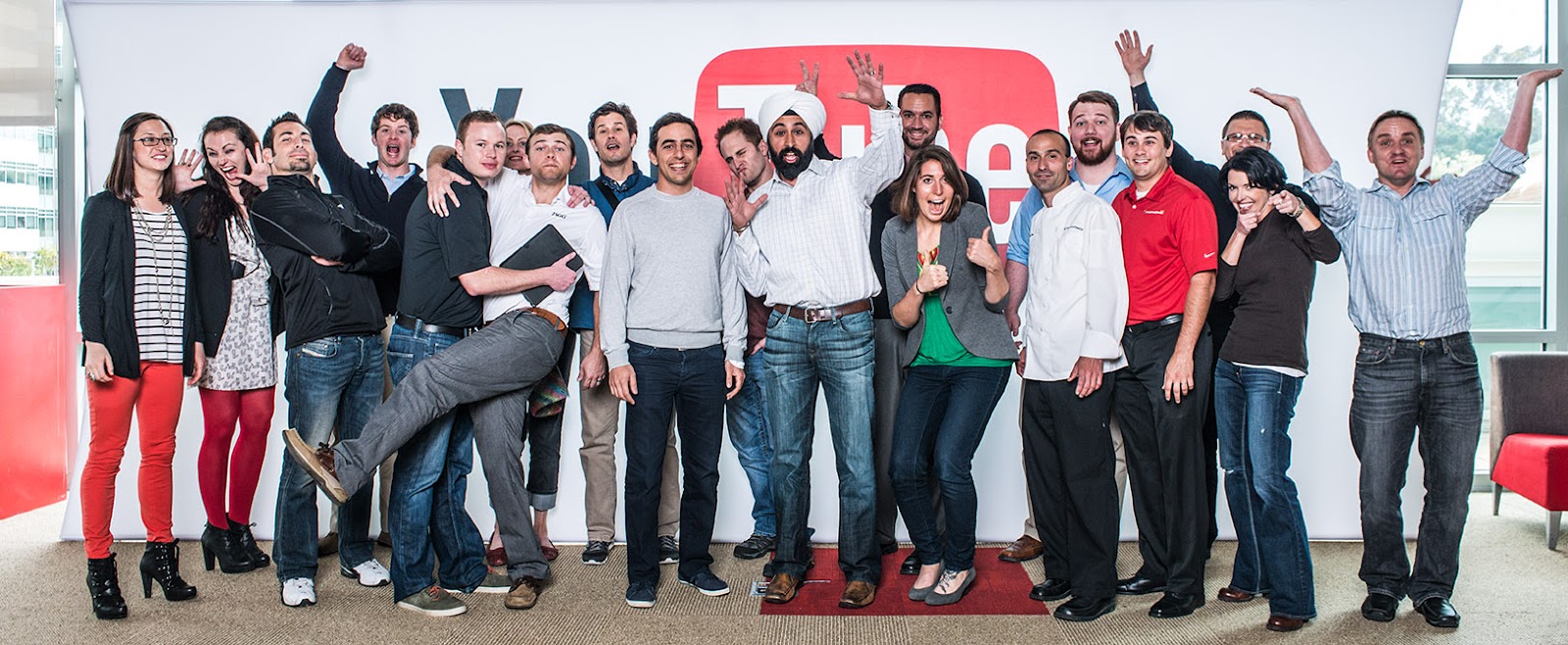
Jake Larsen, founder of Video Power Marketing, was handpicked by YouTube's own founder for the original ten-ambassador program, before YouTube Ads ever launched as a public platform. Jake sat on the team that decided if the ad sucks, you should be able to skip it after five seconds.
Jake also built the original Revenue Growth Workbook, an early framework that informed the work you are now reading.
The creative caliber the work was built to deserve.
Travis Chambers, one of the most decorated direct-response producers of the era, was the preferred-vendor producer behind the campaigns this lineage funded.
- Founder of Chamber Media, scaled to a $17M valuation exit in 2021.
- Created the Kobe vs. Messi spot for Turkish Airlines, the #1 YouTube ad of the decade with 140 million views.
- Produced the NordicTrack treadmill flash mob.
- Forbes 30 Under 30 and Inc. 5000.
- Now founder of OutpostX, building experience-hotels in Utah and Puerto Rico.
What those rooms produced.
Working alongside that caliber of operators meant clients did not arrive curious. The minimum ad spend was ten thousand dollars per month.
They arrived committed. Every single campaign was profitable. Not magic. Engineering.The clients who showed up were ready to invest:
- Ready to enhance their products.
- Ready to improve their service.
- Ready to streamline fulfillment.
- Ready to listen, evolve, and deliver what the marketing was promising.
No excuses. No shortcuts.
What I built from those rooms.
I am Jackson Calame, founder of First Class Business. The Revenue Growth System is what I built from this lineage. The methodology refined across years of operating. The components written down. Two new layers added so a founder who has not yet built every layer underneath can still walk in and use the whole thing.
II The diligence questions most founders skip. Read the chapter Close the chapter ▾
The brands above were not perfect when we started. Yours does not need to be either.
If the case studies above made you wonder whether your business is ready for a system like this, the honest answer is in the questions below.
What if my product is not perfect yet?
None of the case studies above started perfect. Each one had a real defect when we walked in.
Imperfect did not stop them. Unwillingness would have.
They invested in the fixes. Their returns grew exponentially because of it.
What if my funnel has holes I cannot even see?
The system surfaces every flaw on purpose.
Before a single ad goes live, the System reveals the defects you have accepted and must resolve for an irresistible offer and smooth operation. You must stop trying to get rich quick:
- Copy that is mediocre hype.
- Images that are blah or out of harmony.
- Video edits with poorly timed transitions and awkward emotions.
- Testimonials that lack depth.
- Half-baked case studies at best.
- FAQs that are lazy or non-existent, creating resistance.
- Transparency that is avoided.
- Email sequences that push instead of inspire.
- Fulfillment that contradicts the marketing.
- And more that could be easy to work through with discipline.
The system surfaces the holes. True leaders close them without defending. That takes team work. The Workbook gives you eyes you did not have. You need team members that value building excellence.
Most founders flinch when the list shows up. They and their teams make excuses or rationalize why it is too hard.
The clients who became case studies above did not. They wasted no time. They increased their investments. They took meaningful action.
What does it actually take to fix it?
Hours. Dollars. The willingness to receive feedback without negotiating it down to nothing.
And the experts who already know what to do with each defect the system surfaces. The Workbook tells you what is broken.
Every client crushed through the list before launch. No complaints. No negotiations about scope. No pushback on whether the change was strictly necessary.
They invested the man hours and the dollars.
They did not flinch. They got to work and funded their growth.
At First Class Business we even build the fixes alongside you.How fast does the system actually move?
Faster than most founders expect, because the work compounds. Speed depends on which founder you decide to be.
- You champion the cause and inspire your team.
- Every change need gets logged.
- Every implementation ships ASAP.
- Every week you focus on KPI-driven optimizations without complaint.
- Every complaint demotivates the market.
- Every corner cut ruins your offer.
- Every week you drag on makes you a victim.
- Momentum grinds to a halt before the system can compound.
Investment is water for your garden. Team members are the laborers who tend it.
Founders who water generously, who say yes to fixing the system, who put real budget behind it, flourish beyond belief.
Founders who ration the water, who second-guess every line item, who hesitate with every revision, grind momentum to a halt and dehydrate the system.
The garden grows or shrivels at the pace it is watered and tended, or ignored. It is easy to tell the difference between a real gardener and someone going through the motions.
III Four phases. One marathon. Read the chapter Close the chapter ▾
Four phases. One marathon.
The System reveals the methodology. The four phases below are how we run it with you, from the first audit through market dominance.
Strengths and opportunities are easy. The discovery of dozens to hundreds of necessary fixes is where most teams flounder. We repair and replace all obstacles.
We refuse to spend the first dollar of ad spend until the system is First Class certified.
Dozens of additional changes are identified within 7 to 10 days of launch. Ad spend is monitored for daily increases or decreases based on discoveries and KPI performance. We work with tenacity to optimize.
Most founders get addicted to conversions and suck their market dry. We continue improving ads, but real growth comes from attracting new markets by expanding brand awareness.
We compound what is already working while removing waste and preparing for scale sufficient to create sustainable revenue growth.
In Phase 1 we map out three scenarios:
- Break even.The point where the system pays for itself.
- Sustainable apex.Compound effect with balanced effort.
- Market dominance.Becoming the leader and champion.
You have had three phases to decide which end-game you want. If sustainability is the goal, investments calm. If becoming the market leader and champion is your desire, we ramp up.
Simple does not mean easy.
IV Why every existing tool falls just short. Read the chapter Close the chapter ▾
Calculators, value ladders, audience builders, and offer worksheets already exist. Here is why none of those create ROI.
Each of these tools does one thing well. The Revenue Growth System is the first to make all of them operate as one connected system. If you have used any of the four below, the cards will tell you exactly what was missing.
If your ROAS math looked great and the campaign still failed
HubSpot, Qwilr, Omni Calculator, the dozens of standalone tools online. They tell you the math on a campaign you already ran, or one you are about to run.
That is what calculators are built for. Calculating one number on one campaign at one moment in time. Whether a campaign will actually succeed sits in the rest of the system: the audience, the offer, the value ladder, the buyer journey, the ad strategy that carries it. The math is one input. It is not the answer.
Marketing ROI and ROAS Calculators Compared:
HubSpot, Qwilr, Omni Calculator, and the FCB Calculator.
Side-by-side capability comparison of the most-searched marketing ROI and ROAS calculators in 2026.
| Capability | HubSpotMarketing ROI CalculatorView tool |
QwilrROI CalculatorView tool | OmniROAS ToolView tool | FCBDirect Conversion ROI CalculatorView tool |
|---|---|---|---|---|
| Calculates ROAS | ✓ | ✓ | ✓ | ✓ |
| Computes true ROI, including all costs and lifetime value | ✕ | ✕ | − | ✓ |
| Free to use without signup or sales call | − | − | ✓ | ✓ |
| Forecasts results before you spend a dollar | − | − | − | ✓ |
| Connects math to your actual audience definition | − | − | − | ✓ |
| Pressure-tests whether your offer can hold up | − | − | − | ✓ |
| Diagnoses which funnel stage is leaking revenue | − | − | − | ✓ |
| Embedded inside an interactive sales proposal | − | ✓ | − | − |
| Benchmarks against thousands of customer datasets | ✓ | − | − | − |
The Direct Conversion ROI Calculator inside the System ties strategy and math to every asset of your business.
It uses the same ROAS formula every other tool uses. The difference is what surrounds it: the audience, the offer, the value ladder, the funnel diagnostics, the ad strategy. The math sits inside that ecosystem instead of standing alone.
A calculator is a calculator. What surrounds it is the work.If you built a value ladder and it never actually compounded
Russell Brunson teaches it well. ClickFunnels was built on it. The concept is sound, and we use it.
The ladder is a concept. Whether a real ladder actually compounds revenue in your business depends on what you build around it: the audience climbing it, the offers at each rung, the math that decides if the rungs hold weight, the ads that bring strangers to the bottom of it. The ladder is one piece. It is not the answer.
That is why most marketing bros are broke.
The value ladder by itself is the concept. The Value Ladder Builder is the value ladder operationalized.
Asset status, conversion rate, and live cash math running side by side, surfacing what is working, what is missing, and where the next decision actually lives.
It is not strategy. It is digital engineering.If you built an offer and the market still walked past it
Alex Hormozi wrote two books worth reading. Russell Brunson, Donald Miller, Stu McLaren, Jay Abraham, and a dozen others have offer frameworks worth studying. We use the same principles many of them teach. This card is not a critique of any one of them.
It is for the founder who built an offer, in any framework or none at all, and watched the market walk past it.
A worksheet helps you list the ingredients of an offer: the product, the price, the promise, the delivery, the differentiation, the hook.
The ingredients are not where most offers fail. Real offers fail in places a worksheet was never built to test.
Whether the audience the offer was built for is actually the audience showing up. Whether there is a clear path from a stranger's first yes to the offer itself, with each step earning the next. Whether the math survives ad management fees, no-shows, cancellations, and the close ratio your team actually closes at. Whether the proof your buyer needs to believe you is built into the system, or buried somewhere they have to dig for it. Whether the founder is too emotionally attached to the offer to see the changes it actually needs.
A worksheet names the ingredients. It does not tell you whether the kitchen is built.The Power Offers component captures the ingredients with discipline. The other five components of the System each pressure-test the offer against a different layer of operational reality the worksheet was never built to test.
That is the work that decides whether an offer lands.
If your funnel map looks beautiful and the pipeline still leaks
Funnelytics, Geru, Lucidchart, Miro. Drag-and-drop canvases that turn your funnel into something visual. The maps are beautiful. Clients are impressed. Teams align around them.
And the conversion rates do not move.
A canvas shows you what you already drew. It does not tell you whether the audience at the top is the right one, whether the offer at the bottom holds up, or whether the math between any two stages will actually compound. The map is one view. It is not the architecture.
Funnel Mapping Tools Compared:
Funnelytics, Geru, Lucidchart, Miro, and the Power Ads Blueprint.
Side-by-side capability comparison of the most-searched funnel mapping and visualization tools in 2026.
| Capability | FunnelyticsVisual Funnel MapperView tool |
GeruFunnel SimulatorView tool |
LucidchartDiagramming ToolView tool |
MiroCollaborative WhiteboardView tool |
FCBPower Ads BlueprintView tool |
|---|---|---|---|---|---|
| Customer journey mapping tool | ✓ | − | ✓ | ✓ | ✓ |
| Value ladder builder | − | − | − | − | ✓ |
| ROI forecasting calculator | − | − | − | − | ✓ |
| Audience research analysis | − | − | − | − | ✓ |
| Irresistible offer creator | − | − | − | − | ✓ |
| Real-time analytics on a live funnel | ✓ | − | − | − | − |
| Forecast simulation with hypothetical data | − | ✓ | − | − | − |
| General-purpose diagramming beyond funnels | − | − | ✓ | ✓ | − |
| Real-time team collaboration on the canvas | − | − | ✓ | ✓ | − |
Funnelytics, Geru, Lucidchart, and Miro each do their job well. Yet those features often do not lead to profitability. The Power Ads Blueprint is built differently with profitability as the essential benefit. You learn how a stranger becomes a loyal customer, anchor logical assets to their need, uncover the precise emotion the buyer must feel to take action, and track the KPIs that teach you exactly how to improve the system for maximum profit.
All tied to a forward-moving revenue growth system that functions as your map to buried treasure.Each of those tools is one piece. The Revenue Growth System is the first to make all of them operate as one connected system.
The audience definition feeds the offer math. The offer math feeds the ROAS forecast. The ROAS forecast feeds the value ladder. Every layer is anchored to the Power Marketing Funnel that produced every-campaign-profitable results at Video Power.
Change one input. The rest move with it.
That is the difference. Not a better calculator. The infrastructure those calculators were always missing.The Revenue Growth System
Six components, in sequence. Each one earns its place.
The companies that came to Video Power had four of these built before they ever called us. The two at the front, the Profit Maximization Formula and the Value Ladder Builder, are what was added for the founder still building the infrastructure underneath.
Tap any component below to read what it does for you.
1. The Power Ads Blueprint. Most ad spend dies between the click and the close. The Blueprint shows you every stage in between. Solves the gift nobody knows exists.
Most agencies start at stage two and skip the others. Most founders learn this the hard way, after the ad spend is gone and the sale never closed.
The Blueprint draws the whole map: stimulus, landing page, conversion, thank-you page, email list, and remarketing across both your website and your brand.
Every stage corresponds to an emotion the buyer is feeling and an action you need to take, in love and with patience.
The Blueprint names the whole loop.(stimulus → landing page → conversion → thank you → list → remarketing)
2. The Direct Conversion ROI Calculator. You should know what a campaign will return before you spend a dollar. You should know what went wrong if it didn't. Solves the gift you cannot afford to keep giving.
Every stage between a dollar of ad spend and a closed customer, mapped to a conversion rate you can adjust as you learn. Cost per view, cost per click, cost per lead, cost per customer, and the live net return on the right edge of the sheet.
Generic ROI calculators give you abstract numbers. This one ties the math to the actual stages of the Blueprint, so the number on the right edge is the result of decisions you can name and change.
Forecast a campaign before you spend it. Diagnose a campaign after you have run it.Both with the same tool.
(ad spend → views → clicks → leads → customers, with a live net return on the right edge)
3. The Profit Maximization Formula. A buyer says no, not yet, or right now. The Formula has a path for all three. Solves the gift forgotten the moment they say not yet.
Picture the Vistaprint moment. A stranger lands on the homepage and starts designing a free business card. Halfway through, the same logo appears on a coffee mug, then a blanket, then a pen.
The stranger says no, not yet, while quietly falling in love with how the brand keeps showing up.
For the buyer who is not browsing but solving, who calls in overwhelmed about a trade show three weeks out, the line picks up on the second ring and a calm voice says I have got you.
That is the Formula.
A free entry point that respects the prospect's right to say no. A series of small yeses that build trust without coercion. A high-touch path always available for the buyer who is ready to skip the ladder.
Vistaprint built a multi-billion-dollar business on the architecture of that experience.Most marketing systems sold to founders skip the no-pressure entry, skip the small-yes ladder, and put a phone number nowhere.
They are not formulas. They are funnels with the safety rails removed.
4. The Value Ladder Builder. Most founders can see their revenue but not the moves that made it. The Value Ladder Builder shows the whole picture, in motion, in one view. Solves the gift that arrives with no relationship to receive it.
The Formula tells you what the buyer journey should look like. The Value Ladder Builder is where you watch the journey actually run, in your numbers, in real time.
The value ladder, the asset completion status, the conversion rate at each rung, and the live ROAS math, all running side by side in one view.
The Calculator shows you the treasure map. The Value Ladder Builder shows you the GPS.
Where you are. Where the treasure is. The exact distance.KPIs and asset status running parallel to the cash math, surfacing the next decision in front of you.
(value ladder + asset status + conversion rates + ROAS math, all in one view)
5. The Power Audience. You probably know who your ideal customer is. The Power Audience puts that knowledge into words a copywriter can actually use. Solves the gift wrapped for the wrong person.
Demographics and psychographics of the ideal client, written down to the level of detail a copywriter can actually use.
- Avatar, age, marital status, income.
- Fears. Desires. The articles they read.
- What keeps them up at night.
- What they would never admit out loud.
This is the layer most AI tools butcher. Generic prompts produce generic avatars, and the rest of the system inherits the imprecision.
A well-trained AI working from a real foundation can finish this in five minutes and make the rest of the system land.(Demographics and Psychographics of the ideal client, with audience tips and AI-trained prompts)
6. The Power Offers. The right offer to the right person on the right day. The other five components exist to make this one land. Solves the gift that finally lands at the right door, on the right day.
People do not hate ads.
Scroll Facebook for a minute and watch how many likes, comments, and shares the high-quality ones earn. People hate wasted time and forced viewing.
A real ad is a discovery.The Power Offers component is where the Audience becomes an irresistible offer. Not a clever line. Not a discount. An offer the right person cannot scroll past, because it speaks to a desire they were already carrying.
When the offer is right, ad spend stops being a tax and becomes a multiplier.
This is the holy grail most founders chase. It is also the last component in the System for a reason, because every component before it is what makes this one work.
V The reason an offer alone cannot save your business. Read the chapter Close the chapter ▾
If you have built an offer that has not produced ROI, it is not your fault.
Picture a mansion. Beautiful curb appeal. Fresh paint on the front door. Manicured hedges. A founder standing in the driveway, smiling at the camera, telling everyone the address.
Walk inside.
The foundation has not been poured. Two of the walls are missing. The kitchen is a sketch on a napkin. The roof slopes the wrong way. There is no plumbing.
The founder is genuinely confused why nobody wants to live there.
That mansion is the marketing operationof most businesses we meet.
The offer is the gift. The System is everything that makes the gift land at the right door, on the right day, for the right person, with a relationship strong enough that the gift gets opened.
And here is the harder truth.
I No agency taught you how to pour the foundation underneath the offer. Reveal the truth Hide the truth ▾
Agencies get hired to execute and graded on transformation. Founders withhold board-level context because they fear it will burn billable hours. They negotiate the strategic work out of scope to lower the price, then expect strategy delivered alongside the execution.
The result is a transactional vendor relationship where the agency runs ads on the offer they were handed. Without permission to redesign the foundation, no agency on earth can pour one for you.
II No consultant taught you how to frame the walls that hold the system together. Reveal the truth Hide the truth ▾
Consultants get hired to solve a critical problem and then treated as peripheral. Limited access to the real stakeholders. Excluded from the meetings where decisions actually happen. Their hard recommendations get resisted because resisting feels safer than disrupting an organization that has already lived through failed initiatives.
The result is recommendations that never get implemented. A consultant who cannot frame the walls is a consultant who was never let into the room where the framing happens.
III No advisor handed you the blueprint for the digital mansion that actually holds people inside it. Reveal the truth Hide the truth ▾
Advisors get asked for input on the easy decisions and protected from the hard ones. Founders share the wins. They do not share the financial reality, the broken systems, the version of the company that needs the actual blueprint. They want to be told they are right more than they want to be shown what is missing.
The result is advice that fits the version of the business the founder shared, not the version that actually exists. The blueprint can only be drawn for the building that gets shown.
All three relationships fail the same way. Both sides hold the truth. FCB is the firm built to name it on both sides, and to do the work.
You were sold paint and curb appeal and told that was the work.
The Path Forward starts here.
VI Investing in the right system is a leadership decision. Read the chapter Close the chapter ▾
Investing in the right system is a leadership decision.
The Revenue Growth System is the marketing system. Choosing it is the choice to put your hands on the tools, with the team that built them, applied to the real numbers, audience, and offer of your business.
It needs water now.
This is for the founder ready:
- To look at the tools honestly.
- To name what is built and what is missing.
- To invest and build profitably.
VII How leaders engage growth partners. Read the chapter Close the chapter ▾
How leaders engage growth partners.
You have full access to the tools and the system. What you cannot replace is the team that built it. The founders who win do not audition champions. They sign them.
Walk the Path Forward.
You have already met the system. The Path Forward is the engagement that walks you through deciding whether to bring our team in to run it.
Three structured activities give you full transparency before commitment: Compensation as the first step. The Org Board that maps the gaps.
Building together once both sides are sure.
Both are worth it.
The map of how a stranger becomes a customer across all 6 stages.
The interactive teaching tool. The 5 variables every founder owns.
The buyer journey that makes the math hold all the way through the door.
The value ladder operationalized. Asset status, conversion rate, and live ROAS in 1 view.
The Power Strategy calculator with no-shows, cancellations, and close ratios built in.
The master prompt that reveals who you are actually built to serve, not just who has shown up.
The master prompt that pressure-tests your offer against the market before a dollar gets spent.
Seven foundations to build before spend goes live. Five operator commitments once it does.